Traditionally, ships and propulsion units have been optimised for operation in calm water. Operation in heavy seas has only been accounted for using crude safety factors. As we all know, ships are only occasionally operating in calm water. The use of crude safety factors to account for effects of waves and ship motions usually results in designs that are too heavy, too costly, and not optimally efficient. Worse still, is that in some cases this result in ship or propulsion units that are insufficiently strong or powerful, leading to costly and sometimes dangerous failures. By the establishment of the "Performance in a Seaway" UTC, Rolls-Royce, MARINTEK and NTNU aims at taking the design tools for ships and propulsion units to a level where also the effects of waves and ship motions can be taken into account in a sound and scientific manner.
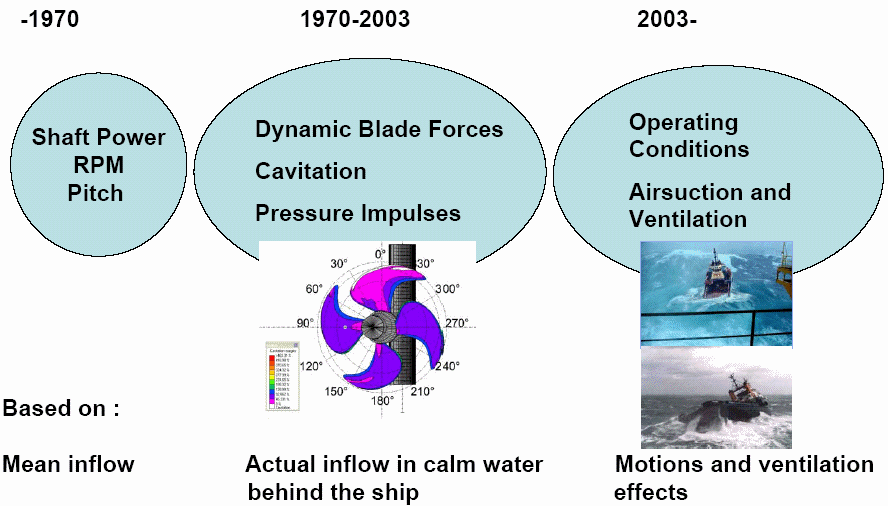
Another aspect is the course of the development of propeller theory and computation tools. As is illustrated in the figure below, the advances in propeller computational tools have now come to a stage where proper inclusion of dynamics due to waves and ship motions seems to be the natural next step.
|